Since you see your dog every day, you may not realize if they start to gain excess weight and dogs with thick fur may also be hiding weight gain under their long coat. Here we have collated some signs that your dog may be overweight, and what to do.
How Can I Tell If My Dog Is Overweight?
The best way to know if your dog is overweight is to stay up to date on their
routine wellness appointments. Your veterinarian will measure and monitor your pet’s weight at each visit and will be able to provide their professional diagnosis.
Between wellness visits, there are some clear signs you can look for to get an idea of whether your dog is overweight:
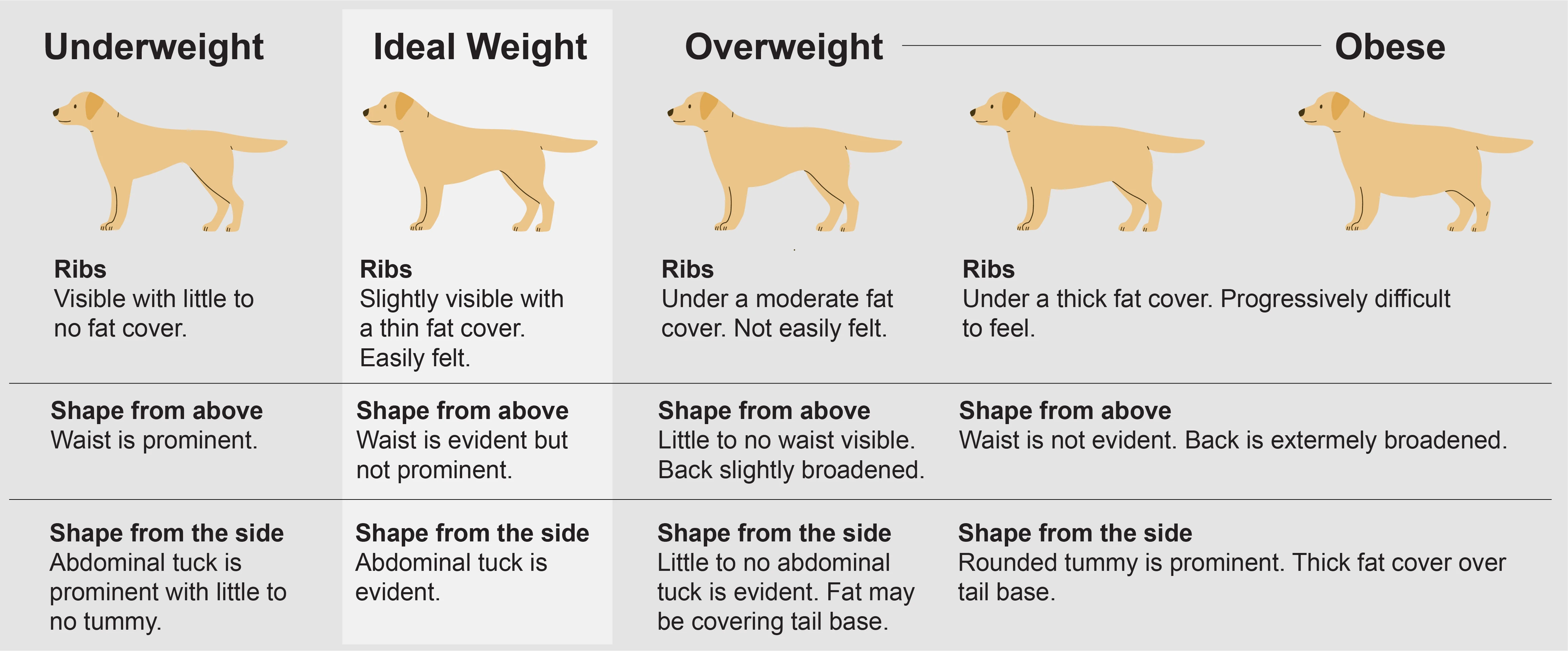
If your dog is at a healthy weight, you should be able to feel the ribs and there should not be a thick layer of fat covering these bones. The chest should be wider than the abdomen, and you'll notice a significant tuck-up from chest to stomach.
Overweight dogs may also walk a bit slower than they once did before, take more naps than usual, and may pant on your daily walks.
I Think My Dog Is Overweight - What Should I Do?
If you suspect your dog is overweight, the first thing you'll need to do is
book an appointment with your vet, who will examine and weigh your pet. The veterinarian can then let you know if your pup is overweight based on the standards for their breed, size, and age.
Your pet’s care team will provide some recommendations on steps you can take to help your dog get back to a healthy weight. See below for some of their potential recommendations.
How Can I Help My Dog Lose Weight?
If your vet finds that your dog is overweight, they will prescribe an exercise routine and diet to help get them on track to a healthy weight. Here are some things you can do to help your dog lose weight:
Regular Exercise & Play
Keep to a strict exercise schedule for your dog. The most common form of exercise for dogs includes twice daily walks and playtime outside, however there are countless other ways to help keep your pet active. For a full list of pet exercise ideas
visit this page > Diet & Feeding
Make sure your pet eats at the same time every day, and that you measure out the portions carefully based on their breed, size, and age.
If you ever have questions regarding your dog’s recommended food intake, please contact your veterinarian.
Restrict Treats of Human Food
Human food should only be given to pets infrequently and in very small amounts. Our foods’ caloric impact on our pets may surprise you –
see some examples here >Check In
Bring your dog to the vet regularly to be weighed. This will allow you to monitor your progress and will let your veterinary care team know if further dietary adjustments or testing are needed.
Please Note: The advice provided in this post is intended for informational purposes and does not constitute medical advice regarding your pet. For an accurate diagnosis of your pet's condition, please make an appointment with your veterinarian.